
Introduction to Carbon Steel
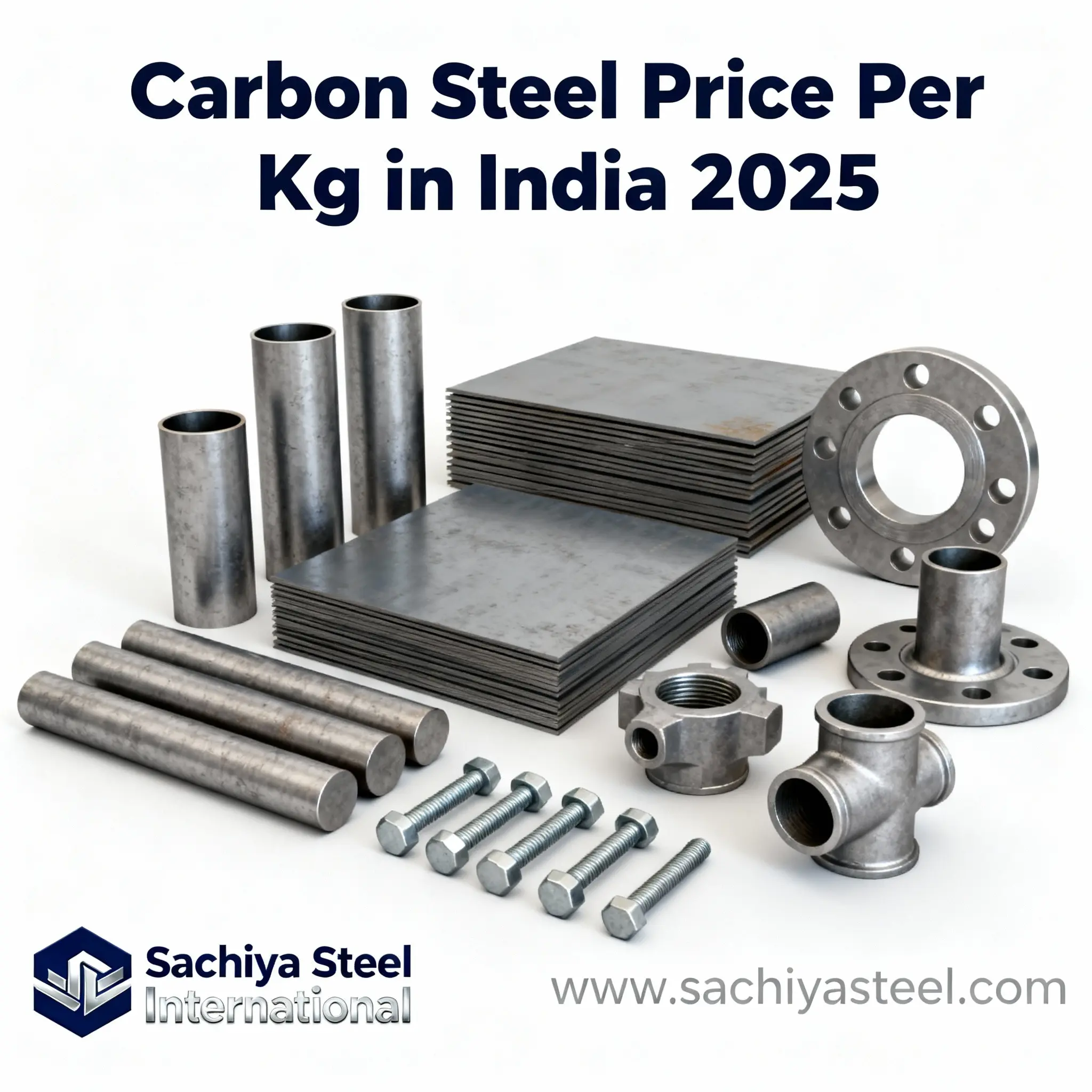
Carbon steel is a cornerstone of the steel industry, forming the backbone of countless construction projects and infrastructure developments across India and the globe. Composed primarily of iron and carbon, the specific carbon content determines the steel’s hardness, strength, and ductility, making it suitable for a wide range of applications. The versatility and cost efficiency of carbon steel have made it a preferred choice for builders, contractors, and manufacturers involved in everything from bridges and buildings to machinery and pipelines.
The price of carbon steel is closely tied to the costs of raw materials such as iron ore and scrap metal, which are subject to global economic conditions and market dynamics. Fluctuations in these raw material costs can significantly affect steel prices, impacting the overall cost of construction projects. As a result, understanding the fundamentals of carbon steel and the factors that influence its pricing is essential for anyone involved in the steel market or planning large-scale construction work. Keeping an eye on steel prices and market trends helps ensure cost-effective material usage and successful project outcomes.
Carbon Steel Price Per Kg: Complete Guide to Current Market Rates & Trends 2025
Carbon steel remains one of the most essential materials in global manufacturing and construction, with India emerging as a leading producer and exporter. As of October 2025, carbon steel prices in India range between ₹45-65 per kg depending on the product type, grade, and regional variations (for the steel price today, always refer to the latest market updates). The steel rate can vary significantly depending on the delivery location due to transportation costs and local demand. Regional and product-specific variations mean that staying updated on steel rates is essential for buyers and industry professionals. Global market dynamics continue to influence domestic pricing structures. Steel is a globally traded commodity, and international market trends directly impact steel rates in India.
Current Carbon Steel Market Rates
The carbon steel market rate today reflects significant regional and product-specific variations. The price of a steel bar depends on its grade and intended use in construction. Hot-rolled coil (HRC) prices stand at approximately ₹63.5 per kg (₹63,500 per tonne), while cold-rolled coil commands premium pricing at ₹75 per kg. Higher grade steel products command premium prices due to their enhanced properties. Steel rebar, a carbon steel product widely used in construction, is priced around ₹47.50 per kg, with wire rod available at ₹46.30 per kg. Reinforcement bars (rebar) are essential for concrete strength and are available in various grades. TMT bar and TMT bars are popular choices for construction due to their superior strength and durability, and TMT steel price and TMT steel prices are important benchmarks for the industry. Regional disparities show Mumbai steel prices at ₹53,500 per tonne with GST, while Durgapur offers more competitive rates at ₹47,700 per tonne.
Carbon Steel Price List Per Kg (October 2025)
| Product Type | Grade/Specification | Price Per Kg (INR) | Price Per Tonne (INR) |
|---|---|---|---|
|
Carbon Steel Pipes |
ASTM A106 Gr.B | ₹58-72 | ₹58,000-72,000 |
| Carbon Steel Tubes | IS 1239 Medium | ₹62-78 |
₹62,000-78,000 |
|
Carbon Steel Sheets |
ASTM A36 | ₹52-68 | ₹52,000-68,000 |
| Carbon Steel Plates | IS 2062 E250 | ₹54-70 |
₹54,000-70,000 |
|
Carbon Steel Round Bars |
EN8/EN9 | ₹48-65 | ₹48,000-65,000 |
| Carbon Steel Flanges | ASTM A105 | ₹85-120 |
₹85,000-1,20,000 |
|
Carbon Steel Fittings |
ASTM A234 WPB | ₹75-95 | ₹75,000-95,000 |
| Carbon Steel Fasteners | IS 1367 | ₹92-135 |
₹92,000-1,35,000 |
|
Hot Rolled Coil (HRC) |
IS 2830 | ₹63-65 | ₹63,000-65,000 |
| Cold Rolled Coil (CRC) | Commercial Grade | ₹74-76 |
₹74,000-76,000 |
Note: Prices are approximate and subject to variation based on quantity, specifications, and market conditions. Contact Sachiya Steel International for current quotations.
Carbon Steel Price Per Kg Across Major Indian Cities
| City | HRC (₹/kg) | Rebar (₹/kg) | Sheets (₹/kg) |
|---|---|---|---|
|
Mumbai |
₹63.5 | ₹48.5 | ₹55.0 |
| Delhi | ₹61.5 | ₹47.0 |
₹53.5 |
|
Kolkata |
₹59.7 | ₹45.8 | ₹51.2 |
| Chennai | ₹62.0 | ₹47.8 |
₹54.0 |
|
Hyderabad |
₹60.0 | ₹46.5 |
₹52.5 |
Types of Steel Products
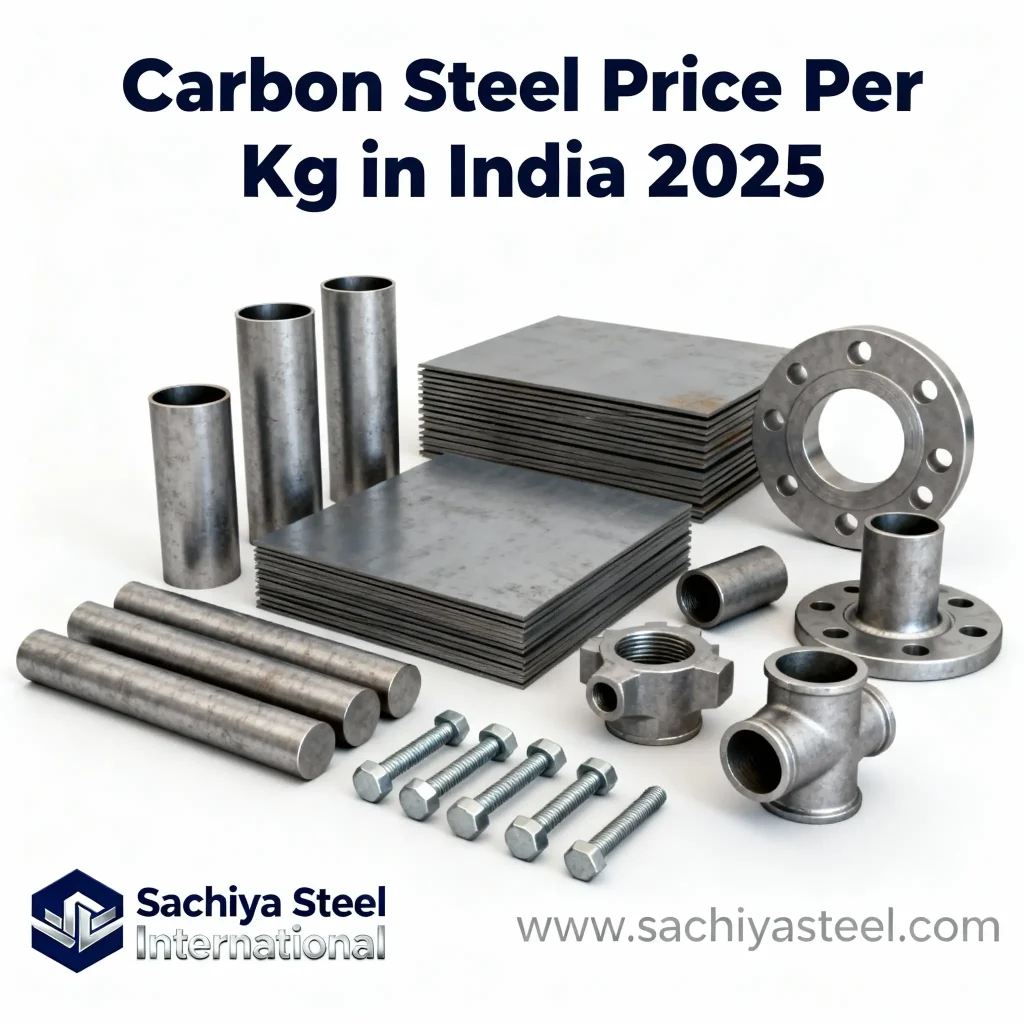
The steel industry produces a diverse array of steel products, each tailored to specific needs and applications. Among the most widely used are TMT steel bars, prized for their superior strength and corrosion resistance, making them ideal for reinforcement in construction projects. In addition to TMT steel, the market offers stainless steel, alloy steel, and tool steels, each with unique properties suited to various industrial and commercial uses.
The pricing of these steel products is influenced by several factors, including production capacity, transportation costs, and government policies. For example, the cost of transporting steel bars or TMT steel to different regions can affect their final price, while government regulations and import duties can also play a significant role. Furthermore, the grade and quality of steel—such as Fe 250, Fe 415, Fe 500, Fe 550, and Fe 600—determine their suitability for different construction activities and influence their market value. As demand for high-quality steel products grows, staying informed about steel prices and market conditions is crucial for making the best purchasing decisions.
Steel Brands and Quality
India’s steel market is home to several renowned brands known for delivering high-quality steel products. Brands like Tata Tiscon, Jindal Panther, JSW Neosteel, and Radha TMT have established themselves as leaders in the production of TMT steel bars and other steel products, offering superior strength and corrosion resistance that meet the rigorous demands of modern construction.
The quality of steel is a decisive factor in ensuring the safety, durability, and longevity of buildings and infrastructure. Steel brands that consistently provide high-grade, certified products often command premium prices, reflecting their commitment to quality and reliability. Certifications such as ISO and GreenPro further enhance a brand’s reputation, assuring customers of compliance with international standards and sustainable practices. As market dynamics evolve, the preference for trusted steel brands continues to influence steel prices and consumer choices, making quality a key consideration in any construction project.
Carbon Steel Price Analysis and Historical Trends
The carbon steel price history reveals substantial volatility over recent years. Economic downturns can lead to reduced steel demand and lower prices, impacting overall market stability. Prices surged during the COVID-19 pandemic due to supply chain disruptions and increased infrastructure demand. Global demand for steel products also plays a significant role in shaping price trends. In 2025, hot-rolled coil reached historic highs of ₹60,000 per tonne, representing a 13-year peak, while cold-rolled coils touched ₹89,000 per tonne. Recent data from October 2025 shows steel trading at 39,890 CNY/T, reflecting a 0.99% increase, though the broader trend indicates a 10.83% decline compared to earlier periods. Fluctuations in steel demand, both domestically and internationally, have contributed to these observed price changes.
Factors Affecting Carbon Steel Price
Multiple interconnected factors drive carbon steel pricing fluctuations. Raw material costs constitute the primary influence, as iron ore and coking coal represent substantial production inputs. Global market trends significantly impact domestic Indian prices, with international demand, trade policies, and geopolitical factors creating price pressures. Energy costs remain critical since steel production is highly energy-intensive, with electricity and fuel price fluctuations directly affecting manufacturing expenses. Advancements in steel manufacturing processes and the modernization of steel mills have also contributed to changes in production costs and pricing, improving efficiency and product quality.
Government policies, including import-export duties and environmental regulations, play decisive roles in price determination. The Indian government proposed a 12% safeguard duty on flat steel imports to curb shipments from China, with minimum import thresholds set at USD 675 per tonne CIF for hot-rolled coil. Currency exchange rates add another layer of complexity, as a weaker Indian rupee increases raw material import costs, thereby pushing up domestic steel prices. Fluctuations in the US dollar also impact import costs and steel pricing in India, as changes in the dollar’s strength affect the cost of imported raw materials and overall market competitiveness.
Carbon Steel Import Duties and Export Prices
India recommended implementing three-year import tariffs ranging from 11-12% on specific steel products to limit imports from China, the world’s leading producer. These tariffs will initially be set at 12%, decreasing to 11.5% in the second year and 11% in the third year. The Directorate General of Trade Remedies (DGTR) concluded that sudden, sharp, and significant increases in imports could inflict substantial harm on the domestic steel industry.
Carbon steel export prices from India remain competitive in global markets, with Indian manufacturers leveraging cost advantages and quality certifications. The proposed safeguard duty framework stipulates that the 12% duty will not apply if import prices exceed minimum thresholds—USD 675 per tonne CIF for hot-rolled coil and USD 695 per tonne CIF for plates.
Carbon Steel Production Costs
Production costs encompass multiple components including raw materials (iron ore, coal), energy consumption, labor, technology investments, and environmental compliance measures. The push toward greener steel production methods, including electric arc furnaces and carbon capture technologies, drives up manufacturing costs. Steel producers increasingly invest in sustainable practices, which affect pricing structures while improving long-term environmental performance. Crude steel production volumes are a key indicator of industry growth and are closely monitored in India.
Delivery Costs and Pricing
Delivery costs are a significant component of the overall price of steel products, including TMT steel bars and other steel bars. These costs can vary depending on the distance between the steel manufacturer and the construction site, as well as the efficiency of transportation logistics. Factors such as fluctuating fuel prices, the state of transportation infrastructure, and prevailing market conditions all play a role in determining delivery costs.
For contractors and builders, understanding and accurately estimating delivery costs is essential for effective budgeting and project planning. Since steel prices can differ across major Indian cities due to these logistical factors, staying updated on current market trends and delivery charges helps ensure that construction projects remain within budget. By factoring in delivery costs alongside the base price of steel, buyers can make informed decisions and achieve the best value for their investment.
Carbon Steel Price Forecast and Pricing Trends
The global carbon steel market is valued at USD 1,140.16 billion in 2025 and is expected to reach USD 1,687.72 billion by 2035, reflecting a compound annual growth rate (CAGR) of 4%. Short-term forecasts (1-2 years) predict moderate price fluctuations driven by ongoing economic recovery, supply chain adjustments, and raw material costs. Medium-term projections (3-5 years) suggest gradual price increases due to rising demand and ongoing investments in technology and sustainability.
India’s carbon steel sector is projected to grow at a CAGR of 3.8% from 2025 to 2035, with infrastructure development and industrialization fueling demand. Economic growth in India is a key driver, as it increases steel demand and supports the expansion of the Indian steel industry. Long-term forecasts indicate more stable pricing as the industry adapts to technological advancements and environmental standards.
Carbon Steel Procurement Strategy
Effective procurement strategies require comprehensive market understanding, supplier diversification, and risk mitigation practices. Strategic sourcing involves selecting suppliers based on reliability, quality, innovation capability, and long-term partnership potential rather than cost alone. Bulk purchasing leverages economies of scale to reduce per-unit costs and secure favorable pricing from suppliers.
Technology integration enhances procurement efficiency through e-procurement platforms, data analytics, and real-time supply chain insights. Price forecasting using historical data and market analysis enables better budgeting and cost control. Incorporating ESG (Environmental, Social, and Governance) criteria and carbon metrics in supplier evaluations ensures compliance with evolving sustainability standards.
Buy Carbon Steel Online from Trusted Suppliers
Digital transformation has revolutionized steel procurement, with online platforms offering streamlined purchasing processes, automated order management, and real-time inventory visibility. E-procurement systems reduce manual errors, speed up transaction processing, and provide data analytics for informed purchasing decisions.
Carbon Steel Supplier India: Industry Leadership
Sachiya Steel International Private Limited stands as India’s leading manufacturer and exporter of comprehensive carbon steel products including pipes, tubes, fittings, fasteners, flanges, round bars, sheets, plates, and circles. With extensive industry expertise, advanced manufacturing capabilities, and rigorous quality management systems, the company delivers carbon steel solutions meeting international standards including ASTM, ASME, and EN specifications.
The company’s product portfolio addresses diverse industrial applications across construction, oil and gas, petrochemical, power generation, and manufacturing sectors. Material Test Certificates (MTC), compliance documentation, and technical support ensure seamless project execution for domestic and international clients.
Cheapest Carbon Steel Suppliers: Quality vs. Cost Balance
While identifying cost-effective suppliers remains important, procurement decisions should balance price considerations with quality assurance, certification compliance, delivery reliability, and technical support capabilities. Carbon steel suppliers offering competitive pricing at ₹200 per kg for specific grades demonstrate market accessibility, though comprehensive evaluation of supplier credentials, manufacturing processes, and quality control measures ensures optimal procurement outcomes.
Carbon Steel Industry News and Market Developments
Recent industry developments include China’s 2025-2026 plan targeting approximately 4% annual value-added growth while shifting focus from scale to quality and efficiency. Steel consumption in certain markets is expected to decline by 0.9% in 2025 before recovering by 3.4% in 2026, with no improvement anticipated before Q1 2026. Global capacity utilization is likely to fall below 2024 levels, leading to near-term reductions in world steel prices.
Carbon Steel Price Comparison Across Regions
Major Indian cities display varying steel prices based on logistics, local demand, and regional supply dynamics. Delhi shows steel prices at ₹51,500 per tonne with GST (₹60,770 without GST), while Kolkata and Durgapur offer more competitive rates at ₹47,700 per tonne with GST. Mumbai, as a major commercial hub, reflects higher pricing at ₹53,500 per tonne with GST, whereas Hyderabad maintains mid-range pricing at ₹50,000 per tonne.
Understanding carbon steel pricing dynamics, market trends, and procurement strategies enables informed decision-making for businesses across construction, manufacturing, and industrial sectors. With comprehensive product offerings, technical expertise, and commitment to quality, Sachiya Steel International Private Limited continues serving as a trusted partner for carbon steel requirements in domestic and international markets.
What is the current carbon steel price per kg in India?
As of October 2025, carbon steel prices in India range between ₹45-65 per kg depending on the product type, grade, and specifications. Hot-rolled coil (HRC) is priced at approximately ₹63.5 per kg, cold-rolled coil at ₹75 per kg, steel rebar at ₹47.50 per kg, and wire rod at ₹46.30 per kg. Prices vary by region, with Mumbai rates at ₹53,500 per tonne, Delhi at ₹51,500 per tonne, and Kolkata at ₹47,700 per tonne. Sachiya Steel International offers competitive pricing on carbon steel pipes, tubes, sheets, plates, flanges, fittings, fasteners, and round bars with complete Material Test Certificates
Which factors affect carbon steel prices in India?
Carbon steel prices are influenced by multiple factors including raw material costs (iron ore and coking coal represent 40-50% of production costs), energy expenses (electricity and fuel for manufacturing), global market trends and international demand, government policies such as import-export duties (currently 11-12% on specific steel products), currency exchange rates (weaker rupee increases import costs), supply-demand dynamics in construction and manufacturing sectors, and environmental compliance costs for sustainable steel production. Geopolitical factors and trade policies, particularly regarding imports from China, also significantly impact domestic Indian carbon steel pricing
Where can I buy carbon steel online in India?
Carbon steel products can be purchased online from Sachiya Steel International Private Limited, India's leading manufacturer and exporter specializing in carbon steel pipes (ASTM A106), tubes (IS 1239), sheets (ASTM A36), plates (IS 2062), round bars (EN8/EN9), flanges (ASTM A105), fittings (ASTM A234 WPB), and fasteners (IS 1367). The company provides complete Material Test Certificates (MTC), third-party inspection support, customized dimensions, and worldwide delivery. E-procurement platforms offer streamlined purchasing with real-time inventory visibility, automated order management, and competitive bulk pricing for construction, oil and gas, petrochemical, and manufacturing industries.
What are the import duties on carbon steel in India in 2025?
India has recommended implementing three-year import tariffs ranging from 11-12% on specific carbon steel products to limit imports from China and protect the domestic steel industry. The Directorate General of Trade Remedies (DGTR) proposed safeguard duties starting at 12% in the first year, decreasing to 11.5% in the second year, and 11% in the third year. The 12% duty does not apply if import prices exceed minimum thresholds of USD 675 per tonne CIF for hot-rolled coil and USD 695 per tonne CIF for plates. These tariffs aim to curb sudden, sharp increases in imports that could harm domestic manufacturers.
What is the carbon steel price forecast for 2025-2026?
The global carbon steel market is valued at USD 1,140.16 billion in 2025 and projected to reach USD 1,687.72 billion by 2035, reflecting a compound annual growth rate (CAGR) of 4%. India's carbon steel sector is expected to grow at 3.8% CAGR from 2025 to 2035, driven by infrastructure development and industrialization. Short-term forecasts (1-2 years) predict moderate price fluctuations due to economic recovery, supply chain adjustments, and raw material cost variations. Medium-term projections (3-5 years) suggest gradual price increases from rising demand and sustainability investments. Long-term trends indicate more stable pricing as the industry adapts to technological advancements and environmental standards.
How much do carbon steel pipes cost per kg?
Carbon steel pipes in India cost between ₹58-72 per kg depending on grade, specifications, and dimensions. ASTM A106 Grade B seamless pipes, widely used in high-temperature applications for refineries, power plants, and petrochemical facilities, are priced in this range. IS 3589 and IS 1239 pipes for structural and general engineering applications typically cost ₹55-68 per kg. ERW (Electric Resistance Welded) pipes are generally 10-15% cheaper than seamless pipes. Prices include factors such as wall thickness, diameter (ranging from 1/2 inch to 24 inches), length, and coating requirements. Sachiya Steel International provides carbon steel pipes with complete MTC certification.
What is the difference between hot-rolled and cold-rolled carbon steel prices?
Cold-rolled carbon steel is typically 15-20% more expensive than hot-rolled steel. As of October 2025, hot-rolled coil (HRC) is priced at ₹63.5 per kg (₹63,500 per tonne), while cold-rolled coil (CRC) commands premium pricing at ₹75 per kg (₹75,000 per tonne). The price difference reflects additional manufacturing processes for cold-rolled steel, which involves rolling at room temperature after hot-rolling, resulting in better surface finish, tighter dimensional tolerances, improved strength properties, and enhanced formability. Hot-rolled steel is preferred for structural applications, while cold-rolled steel is used for automotive components, appliances, and applications requiring superior surface quality.
What carbon steel grades are most commonly used in India?
The most commonly used carbon steel grades in India include ASTM A36 (general structural applications and construction), IS 2062 Grade E250/E350 (structural steel plates and sections), ASTM A106 Grade B (high-temperature service pipes for refineries), IS 1239 Medium and Heavy (tubes for scaffolding and general engineering), EN8/EN9 (round bars for automotive components and shafts), ASTM A105 (forged carbon steel flanges for pressure applications), ASTM A234 WPB (butt-weld pipe fittings), and IS 1367 (high-strength fasteners in various grades). These grades meet international standards and are widely available from Indian manufacturers with complete Material Test Certificates and compliance documentation.
Why do carbon steel prices vary across different Indian cities?
Carbon steel prices vary across Indian cities due to transportation and logistics costs (distance from manufacturing hubs or ports), local demand-supply dynamics (higher demand in construction-heavy regions increases prices), regional tax variations despite GST implementation, proximity to steel plants and raw material sources (regions near steel mills have lower prices), infrastructure quality affecting distribution efficiency, local market competition among suppliers, and freight charges based on distance and transportation mode. For example, Mumbai shows higher prices at ₹53,500 per tonne due to port logistics and urban demand, while Durgapur offers competitive rates at ₹47,700 per tonne being closer to steel manufacturing clusters in eastern India. Regional price differences typically range from 5-15% across major cities.
Conclusion
In conclusion, the steel industry is a driving force behind India’s construction and infrastructure development, with steel prices shaped by a complex interplay of dynamic factors. Raw material costs, such as iron ore and other essential inputs, global economic conditions, and overall market dynamics all influence steel pricing and the cost of construction projects. The quality and grade of steel, along with the reputation of leading steel brands, play a crucial role in determining steel prices and consumer preferences.
Staying informed about the latest steel prices, steel price per kg, and market trends is vital for contractors, builders, and individuals seeking cost efficiency and the best value in their construction activities. By understanding the factors that affect steel prices—including transportation costs, energy prices, government policies, and production capacity—stakeholders can make strategic decisions that optimize material usage and control overall costs. As the global steel market continues to evolve, keeping abreast of current price fluctuations and historical data ensures successful, cost-effective construction planning and long-term project success.